



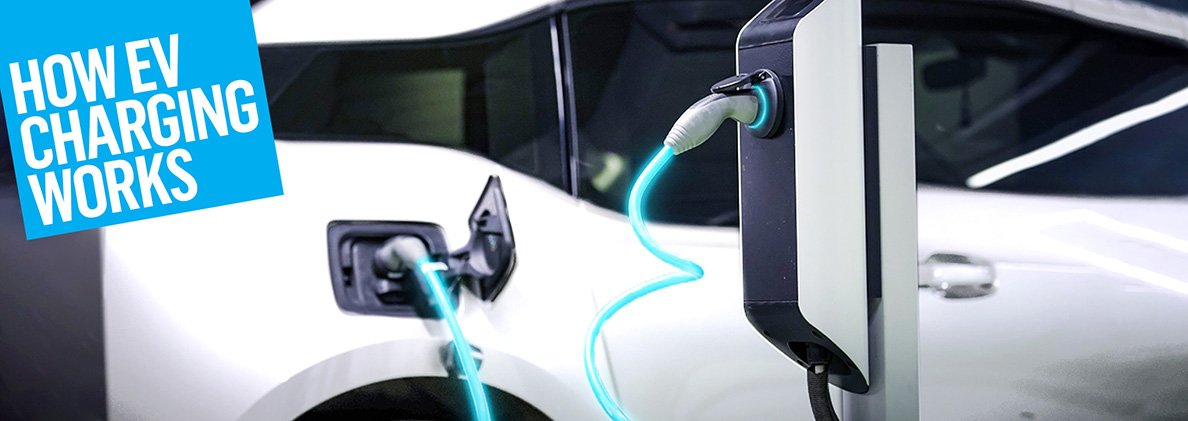
Charging an electric car is a simple process: you simply plug your car into a charge point that is connected to an electricity supply, however EV charging points can vary in shape, size and features.
Some can be installed simply by plugging into a standard wall outlet, while others require a custom installation. The time it takes to charge your car will also vary based on the charger you use.
how to charge an electric car
There are three basic ways to charge an electric car: at home, at work, or at a public charging point.
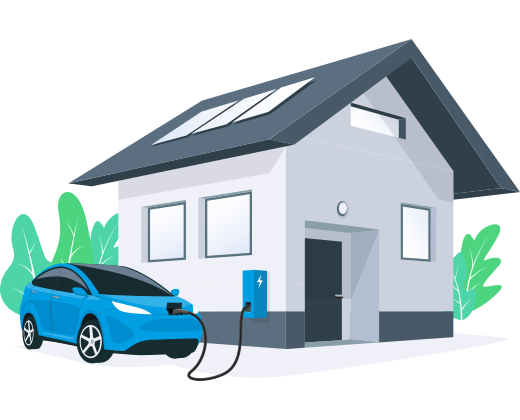
Charging at home
If you have off-street parking, you can charge your electric car at home by having a dedicated home charger installed. This is usually the most convenient place to charge, particularly when you can plug-in overnight. Most home chargers will have a cable attached so you can just plug in to start charging.
A dedicated home charging point will:
- Have built in safety features to protect you, your home and your car
- Offer decent charging speeds of 10-30 miles of range per hour your car is plugged in
- Offer energy monitoring and software updates if it is wifi enabled
- Often come with a cable attached for instant charging
- May also come with a universal ‘Type 2’ socket and cable which can be used for charging at work or in public
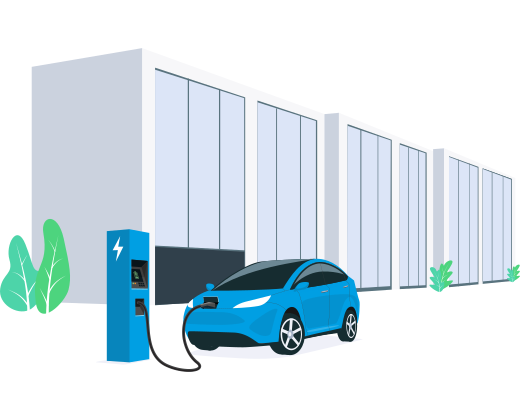
Charging at work
Charging your electric car at work is highly convenient, as your car is often parked for an extended period of time.
Charging at work will:
- Offer the same charging speeds as home charging
- Usually have universal ‘Type 2’ sockets, so you will need to take your own cable to charge your car
- Occasionally require an RFID swipe card or an app on your smart phone to start the charge
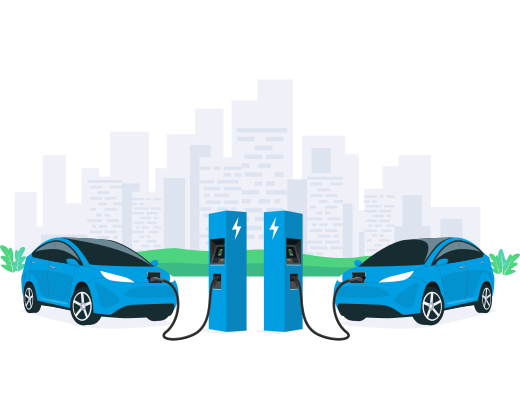
Charging in public
There will be occasions when the charge you get at home, won’t be enough for you to reach your destination and you’ll need to make use of public charging points. These can often be found in locations like service stations, supermarkets, shopping centres and cinemas etc.
Destination charging will:
- Enable anyone to top up their car on the go
- Usually require you to bring your own charging cable to use
- Often be pay as you go, so depending on the network, you’ll either need to download an app, go to a website or have a pre-registered RFID card
- Sometimes be free to use if you’re a customer at the premises
- Show locations available on websites such as Zap-Map

