


Building Regulations
PART F CHANGES TO VENTILATION BUILDING REGS


Approved Document F of the Building Regulations for Ventilation is changing and comes into effect on 15th June 2022.
It forms part of the Government response towards the introduction to the Future Homes and Buildings Standard in 2025, covering energy efficiency, ventilation, and overheating.
The guidance in Approved Document F, Volume 1 applies only to dwellings. For blocks of flats with shared communal rooms, Approved Document F, Volume 2: Buildings other than dwellings should be consulted.
 Download Approved Document F
Are You Aware?
Here are some details of the regulations changes and how they may affect you
The various ventilation systems within Part F are no longer classified between 1 and 4. It now has 3 ventilation systems:

Natural Ventilation
Previously known as system 1
Intermittent Extract Fans with background ventilators.
- Suitable for less airtight dwellings
- Intermittent extract fans should be fitted in all wet rooms
- Also requires correctly sized and fitted trickle vents to be installed
- Extraction rates remain the same as 2013 Edition
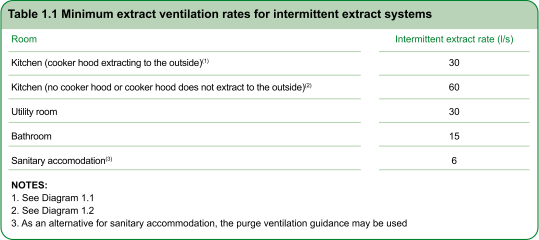

Continuous Mechanical Extract
Previously known as system 3
A continuous mechanical extract ventilation system could consist of one of the following:
- A central extract system known as MEV (Mechanical Extract Ventilation)
- Individual room continuous extract fans known as dMEV (decentralised mechanical extract ventilation)
- A combination of both MEV and dMEV
- Also requires correctly sized and fitted trickle vents to be installed
- Requirements for ventilation rates are measured in both boost rates and continuous rates
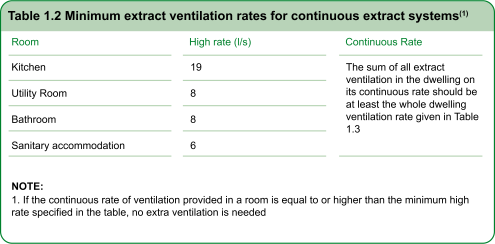

Minimum High (Boost) extract rates for continuous mechanical extract for each wet room.

Total Combined rate of continuous ventilation in the dwelling needs to meet the above minimum rates.
Mechanical Ventilation with Heat Recovery (MVHR)
Previously known as system 4
Mechanical Ventilation with Heat Recovery (MVHR) are whole house systems that extracts air from wet rooms whilst also supplying fresh, filtered air into habitable rooms.
Under Part F these systems:
- Must meet the whole dwelling ventilation rates set out in Table 1.3 (above)
- Heat Recovery minimum efficiency has increased from 70% to 73%
- Extract air flow must match the supply air flow in order to create a balanced system
- Must be installed by a competent person (a SAP benefit as of 2010)
- Should have ductwork designed to minimise overall length of duct, minimise the number of bends and ensure appropriately sized duct for the air flow rate

Other Ventilation types may be used – Passive Input Ventilation (PIV) or Passive stack ventilation but expert advice should be sought and it can be demonstrated to building control that they meet requirement F1 of the new regulations.
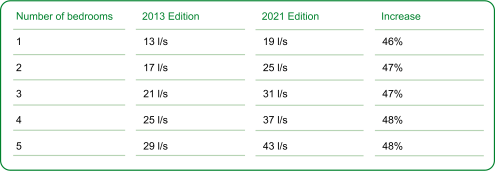
Minimum whole dwelling ventilation has increased
A significant change to Part F is that the whole dwelling ventilation rates have been increased.
- If a dwelling has one habitable room, a minimum ventilation rate of 13l/s should be used
- For each additional bedroom, add 6l/s to the 13l/s minimum requirement
- Alternatively, the whole dwelling minimum ventilation rate should be 0.3l/s per m2 of internal floor area

Commissioning checklist can be found within Appendix C of Part F.
Testing and Commissioning
As of 15th June 2022 the following is compulsory:
-
Air flow rates of ALL mechanical ventilation fans should be tested
This includes:
- Intermittent Extract Fans
- Cooker Hoods
- Continuous extract fans
- MEV systems
- MVHR Systems
- All extraction readings MUST be submitted to building control
- A certificate stating the recorded rates MUST be left with the property owner
- All ventilation rates should be tested using the correct UCAS accredited flow test instrument in accordance with Building Regs Part F


FEATURED CO 2 MONITORS
For assistance with Volume 2 of Part F regulations which deals with Buildings other than dwellings, such as commercial, please see our range of CO2 monitors
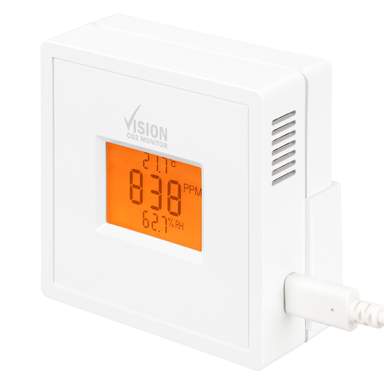
Vision CO2 Monitor USB Powered
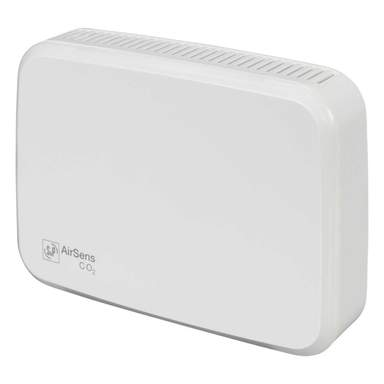
Envirovent AirSens CO2 Indoor Air Quality Sensor
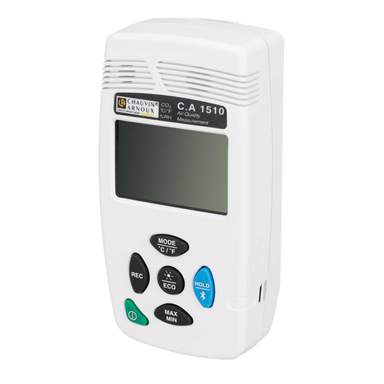
Chauvin-Arnoux CA1510 Multifunction Air Quality Data Logger